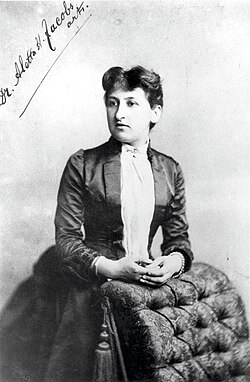
 Aletta Henriëtte Jacobs (February 9, 1854 – August 10, 1929) was a trailblazing Dutch physician, women's suffrage leader, and activist for birth control and pacifism.
Queer Places:
Begraafplaats & Crematorium Westerveld, Duin- en Kruidbergerweg 2- 6, 1985 HG Driehuis, Netherlands
Aletta Henriëtte Jacobs (February 9, 1854 – August 10, 1929) was a trailblazing Dutch physician, women's suffrage leader, and activist for birth control and pacifism.
Born in Sappemeer, Netherlands, she broke numerous barriers throughout her life:
Jacobs became the first woman to officially attend a Dutch university, enrolling at the University of Groningen in 1871 after receiving special permission from Prime Minister Johan Rudolf Thorbecke. She earned her medical degree in 1879, becoming the first female physician in the Netherlands.
Settling in Amsterdam, she established a medical practice focusing heavily on working-class women and children. In 1882, she opened the world's first birth control clinic, distributing diaphragms and promoting family planning to help break the cycle of poverty and high infant mortality.
Jacobs dedicated her life to securing political rights for women. She served as president of the Dutch Association for Women's Suffrage (Vereeniging voor Vrouwenkiesrecht) from 1894 to 1919. She also played a pivotal role in the International Woman Suffrage Alliance (IWSA), traveling extensively across the globe to advocate for women's voting rights.
A dedicated pacifist, Jacobs helped organize the International Congress of Women in The Hague in 1915 during the height of World War I, bringing together over 1,000 women from belligerent and neutral nations to advocate for peace mediation.
Aletta Jacobs shared deep professional and personal ties with American social reformer Jane Addams (co-founder of Hull House) and Addams's lifelong partner, Mary Rozet Smith. Their network reflects a vibrant, transnational community of prominent early 20th-century women reformers.
Jacobs and Addams worked closely together within the international women's suffrage and peace movements, particularly through the IWSA and the Women's International League for Peace and Freedom (WILPF).
As noted in historical records regarding Addams and Smith's romantic partnership, Smith was widely admired within Addams’s inner circle. Jacobs frequently expressed profound warmth toward Smith following their meetings at international conferences:
In 1915, Jacobs wrote to Addams: “Will you kiss your dear friend, Miss Smith, for me and tell her that in sleepless nights and even in nice dreams I see her before me as a good angel.”
In 1919, she added: “I have a remembrance of her as one of the sweetest women I ever met in the world.”
In 1923, Jacobs famously concluded: “I always have admired her and if I would have been a man I should have fallen in love with her.”
While expressions of deep emotional intimacy, romantic friendship, and intense devotion between women were common among early feminist reformers—often described using the terminology of the era (such as "Boston marriages" or romantic friendships)—historians view figures like Addams and Smith through the lens of early LGBTQ history. Jacobs's playful yet heartfelt commentary underscores the warmth, profound mutual respect, and close-knit emotional bonds that characterized the personal networks of the international women's movement.
References:
Other references:
Support this project
This website is a passion project researched, developed, and funded entirely by me. If you find the content valuable and would like to help support the ongoing research and hosting costs, any contribution is deeply appreciated.
Thank you for keeping this independent resource alive!
My books on Amazon: Elisa Rolle's books

